
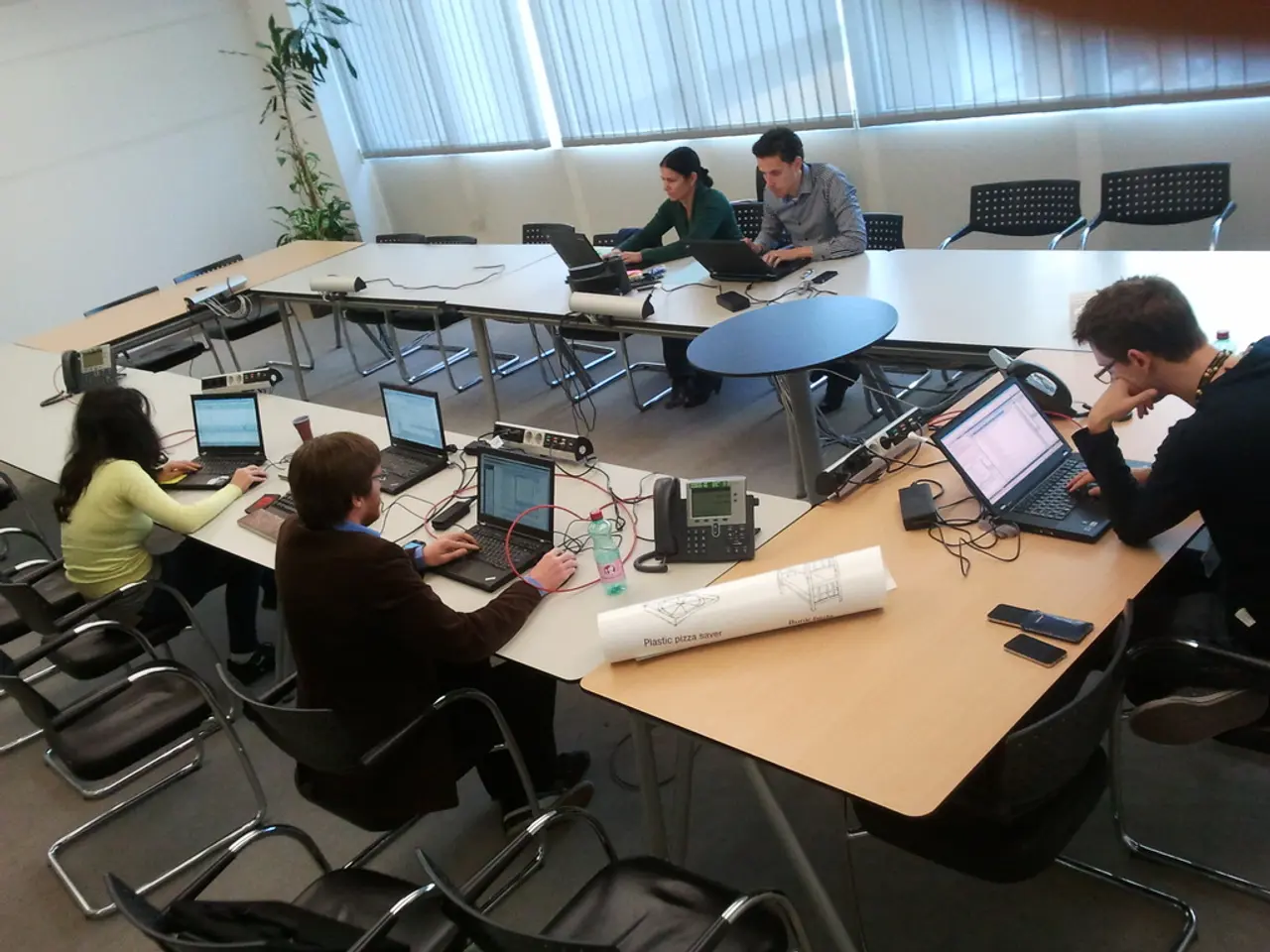
Away from the Workplace Physically
In a recent survey conducted by the Global Payroll Association (GPA), it has been revealed that the majority of UK office workers are embracing a hybrid working model, with 74% currently working from home for at least part of the week. Only 26% of participants reported working from the office for the full five-day work week.
The survey also found that productivity levels among home workers are generally high, with 55% of participants reporting that they are more productive at home, and 38% stating that they are just as productive as in the office. This suggests that remote working is not only popular but also effective for many UK workers.
The CEO of GPA, Melanie Pizzey, commented on the findings, stating that a flexible working arrangement is a key requirement for many UK workers. In fact, 94% of workers said it's important for them to maintain a degree of flexibility in their working arrangement, and 75% said they would turn down a job that didn't offer such flexibility.
The GPA's survey findings can be accessed in full here. It is worth noting that the survey results provided do not include specific research or data from The Global Payroll Association regarding current workforce preferences for hybrid or remote working. Instead, the results focus largely on wage trends, public sector workforce challenges, diversity and inclusion practices, and pay transparency.
Despite the positive findings, there are still some who question the effectiveness of remote work. For example, the former Head of Asda claimed that remote working is 'creating a generation who are not doing proper work'. However, the GPA CEO, Melanie Pizzey, expressed interest in seeing data supporting claims that productivity levels have decreased due to remote work.
It is clear that the trend towards hybrid working is not just limited to the UK, with many global companies also adopting this model. However, it is important for employers to strike a balance between remote work flexibility and office collaboration to ensure that their employees are productive and happy in their roles. Stereotypes associated with working from home, such as missed alarms, not getting dressed, and avoiding the laptop, may need to be challenged to ensure that remote workers are taken seriously and given the support they need to succeed.
Overall, the GPA survey findings suggest that hybrid working is a popular and effective model for many UK workers. With the right balance of flexibility and support, it is likely that this trend will continue to grow in the coming years.
In the realm of health and wellness, it's crucial for employers to prioritize workplace wellness, ensuring that remote workers maintain a balanced lifestyle while working from home. For instance, providing resources for creating a comfortable and ergonomic housing setup could boost productivity and overall well-being.
Furthermore, as science continues to evolve, it's important for businesses to stay informed about the latest research on remote work, including its impact on productivity levels and mental health, to make informed decisions about their hybrid working policies. This approach could help dispel stereotypes and ensure that every employee feels valued and supported, thus fostering a positive work culture.