
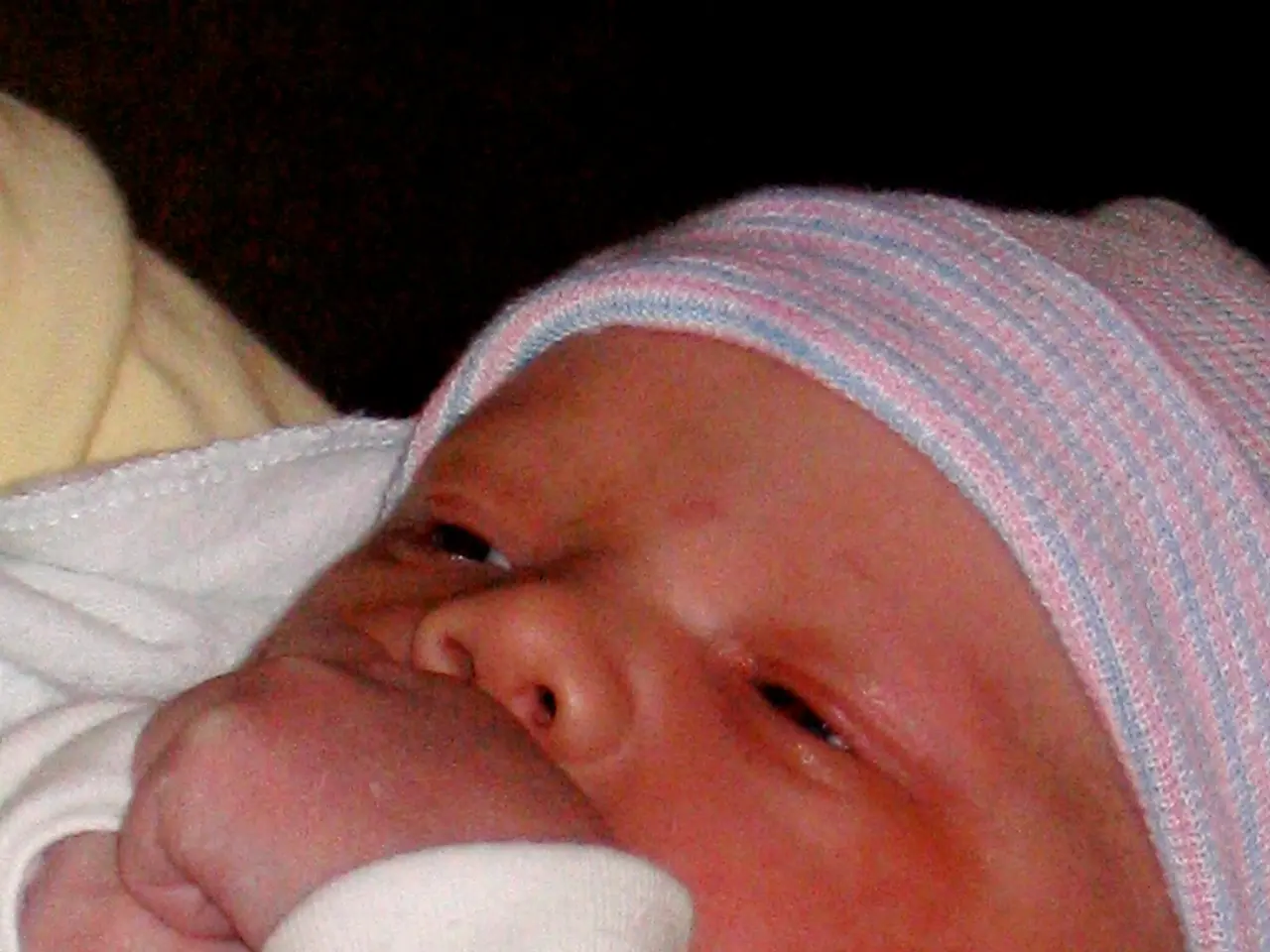
Chapped Newborn Lips: Understanding Causes and Remedies
Newborns, with their delicate skin, are susceptible to various skin conditions, one of which is chapped lips. This article aims to provide parents and caregivers with practical advice on preventing and managing chapped lips in newborns.
Chapped lips in newborns can be caused by several factors. One common cause is the strong sucking instinct of babies, which can lead to dryness. Another cause is environmental factors such as heat, cold, and wind, which can strip moisture from a baby's exposed skin, including their lips. Dehydration, due to insufficient breast milk or formula milk intake, can also result in dry skin and chapped lips, especially on hot days when babies may require additional feeds to prevent dehydration.
Prevention methods for chapped lips in newborns include maintaining a consistent temperature in the house, using a humidifier, dressing the baby appropriately for the weather, and avoiding lotions and creams unless they are specifically designed for babies. Feeding the baby regularly and increasing feeds in hot weather can also help prevent dehydration. If home remedies do not help or if the newborn baby shows any other symptoms, it is essential to speak to a doctor.
If chapped lips persist or worsen, it may indicate underlying conditions. Chronic chapped lips can be a sign of skin shedding (Vernix Caseosa removal), skin conditions such as eczema, or even rare genetic skin disorders like ichthyosis. Newborns with sensitive skin may develop chapped lips as a reaction to an irritant, such as cosmetics or certain lotions and creams.
In some cases, chapped lips can be a symptom of Kawasaki disease, a rare condition affecting babies and children, which causes red, chapped lips, fever, a red rash, and swollen arms and legs. If someone is concerned that their newborn has an underlying health condition or is dehydrated, they should make an appointment with a doctor as soon as possible.
Fortunately, there are remedies to help moisturize a newborn's lips. Lanolin, coconut oil, and breast milk can help keep the lips soft and moisturized. However, it is essential to consult a doctor before using any remedy, especially if the chapped lips are persistent or accompanied by other symptoms.
In conclusion, understanding the causes of chapped lips in newborns is crucial for effective prevention and treatment. By maintaining a consistent environment, feeding the baby regularly, and seeking medical advice when necessary, parents and caregivers can help keep their newborns' lips healthy and happy.
References: [1] American Academy of Pediatrics. (2021). Caring for Your Baby's Skin. Retrieved from https://www.healthychildren.org/English/ages-stages/baby/diaper-changing/Pages/Caring-for-Your-Babys-Skin.aspx [2] Mayo Clinic. (2021). Diaper rash. Retrieved from https://www.mayoclinic.org/diseases-conditions/diaper-rash/symptoms-causes/syc-20374562 [3] National Eczema Association. (2021). Infantile Atopic Dermatitis (Eczema). Retrieved from https://nationaleczema.org/eczema/types-of-eczema/infantile-atopic-dermatitis/ [4] American Academy of Dermatology. (2021). Atopic Dermatitis (Eczema). Retrieved from https://www.aad.org/public/diseases/eczema/atopic-dermatitis
- Despite their delicate skin, newborns can develop various skin conditions, among them being chapped lips.
- Strong sucking instincts can lead to dryness and chapped lips in newborns.
- Environmental factors such as heat, cold, and wind can also cause chapped lips by stripping moisture from a baby's skin.
- Dehydration due to insufficient breast or formula milk intake can result in dry skin and chapped lips, especially in hot weather.
- To prevent chapped lips in newborns, maintaining a consistent temperature, using a humidifier, appropriate dressing, and avoiding unsuitable lotions are recommended.
- Regular feeding and increased feeds in hot weather can help prevent dehydration and subsequent chapped lips.
- Persistent or worsening chapped lips might indicate underlying conditions such as eczema, ichthyosis, or Kawasaki disease.
- Newborns with sensitive skin may react to cosmetics or certain lotions, leading to chapped lips.
- If concerned about an underlying health condition or dehydration, immediate consultation with a doctor is advised.
- Lanolin, coconut oil, and breast milk can help moisten newborn lips, but it is essential to seek medical advice before using any remedy.
- Maintaining a consistent environment, feeding the baby regularly, and seeking medical advice when necessary contribute to keeping newborn lips healthy.
- A variety of resources, including the American Academy of Pediatrics, Mayo Clinic, National Eczema Association, and American Academy of Dermatology, provide information on newborn skin care.
- Health-and-wellness and skin-care science play crucial roles in understanding and managing skin conditions in newborns.
- In addition to chapped lips, newborns may also be susceptible to other skin conditions like asthma, psoriasis, diabetes, macular degeneration, ulcerative colitis, and migraine, requiring close monitoring and appropriate care.