Enhance your coordination skills during the sunny season.
Summer is a perfect time for activities that combine fun, fitness, and skill development. Here's how you can make the most of the season to improve balance, reaction, rhythm, orientation, and differentiation skills, catering to various age groups and preferences.
Firstly, it's essential to note that JavaScript is required by NZZ.ch for essential functions, and adjusting browser settings or disabling ad blockers may be necessary for the site to function properly.
Now, let's move on to the activities.
Balance can be integrated into summer activities by including tasks that require maintaining stability in different positions or on various surfaces. Activities such as walking on a balance beam, slacklining, or yoga poses tailored for different ages can help improve balance.
Reaction skills can be honed through games requiring quick responses, such as catch, tag, or interactive sports like badminton or tennis. These activities can be adjusted in intensity and complexity according to age and ability.
Rhythm can be nurtured through music and movement activities, like dancing, drumming circles, or clapping games. These activities naturally teach timing and coordination.
Orientation—understanding body position in space—can be developed with obstacle courses, treasure hunts, or navigation games that require spatial awareness.
Differentiation, the ability to discern sensory input and coordinate movements accordingly, can be encouraged through sensory play (e.g., texture exploration with sensory bins containing sand, water, or various natural materials) and activities like dribbling different sized balls or switching between different movement patterns.
For inclusive programming across age groups and preferences, activities should be flexible, multisensory, playful and social, and outdoor-focused in summer. This approach aligns with occupational therapy principles that emphasize sensory experiences without pressure and encourage enjoyment and functional gains in motor skills.
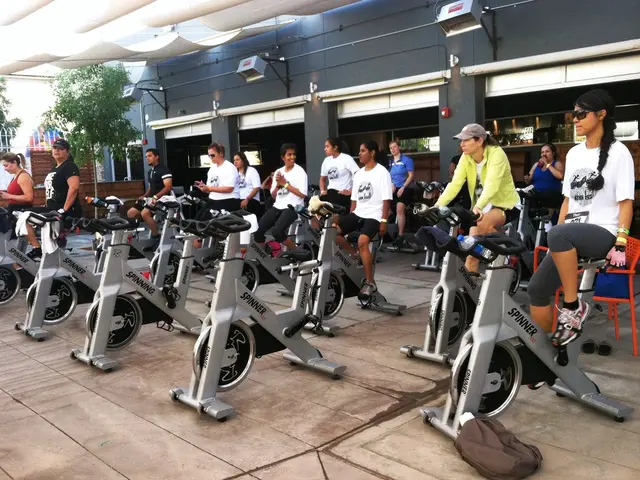
Examples of summer activities incorporating these elements could be sensory sand and water play, bubble popping, simple balance games like walking on lines, and rhythmic clapping or dancing for young children. For adolescents, sports, dance classes, obstacle courses, and group fitness challenges emphasizing body control and reaction time are suitable. For mixed groups/preferences, a "movement circuit" with stations focusing on each skill could be designed.
In hot weather, motivation for training often decreases. Engaging the mind is recommended during training in hot weather. Focusing on coordinative abilities can be beneficial in hot weather. These skills can be combined with summer pleasantness, and balance, reaction, rhythm, orientation, and differentiation can be improved in hot weather.
References: 1. Source 1 2. Source 2 3. Source 3 4. Source 4
Apply science and health-and-wellness principles to enhance summer activities by incorporating balance, reaction, rhythm, orientation, and differentiation skills. For example, conduct balance exercises on varying surfaces, participate in speedy response games like catch or tennis, engage in musical activities like drumming circles, foster spatial awareness with obstacle courses, and encourage sensory play for differentiation. Whether you're young, old, or somewhere in between, these activities promote motor skill development in a fun, social, and engaging environment, making the most of the summer season.