Hysteroscopy Exam: Details on the Procedure, Expenses, and Recuperation
A hysteroscopy is a medical procedure used to diagnose and treat problems related to the uterus or womb. This procedure, usually carried out in a hospital or doctor's office, does not require an overnight hospital stay [1].
One of the most common indications for hysteroscopy is abnormal uterine bleeding (AUB) [1][2]. This can be defined as menstrual periods becoming heavier, happening more frequently, or lasting longer than usual. Hysteroscopy helps in diagnosing and treating bleeding disorders originating from within the uterus.
The procedure involves a thin, telescope-like camera, known as a hysteroscope, being inserted into the uterus via the vagina. Carbon dioxide gas or fluid is pumped through the hysteroscope to help the doctor see the lining of the uterus more clearly [4]. As the hysteroscope is moved gently through the uterus, images of the tissue and the openings of the fallopian tubes are displayed on a screen [5].
If a biopsy is needed, a small instrument is passed through the hysteroscope to extract a sample of tissue [3]. A diagnostic hysteroscopy is carried out to investigate abnormal uterine bleeding.
Hysteroscopy can be used to diagnose and treat various uterine conditions. For instance, it can help in the removal of endometrial polyps, growths in the lining of the uterus that can cause bleeding [1][2]. Hysteroscopy can also be used to diagnose and treat intracavitary fibroids, fibroids located within the uterine cavity [1].
Intrauterine adhesions, known as Asherman's syndrome, can cause infertility or recurrent miscarriage. Hysteroscopy is used for their diagnosis and treatment [1][4]. Uterine anomalies such as a uterine septum or arcuate uterus can be diagnosed and sometimes treated via hysteroscopy [1][2].
Hysteroscopy is often used to evaluate and treat conditions that may be contributing to infertility or recurrent pregnancy loss, such as adhesions or polyps [2][4]. Suspected tubal pathology can also be assessed indirectly via hysteroscopy [3].
Retained intrauterine devices (IUDs) can be located and removed using hysteroscopy [1]. Hysteroscopy allows for the examination and treatment of lesions located in the endocervical canal [1].
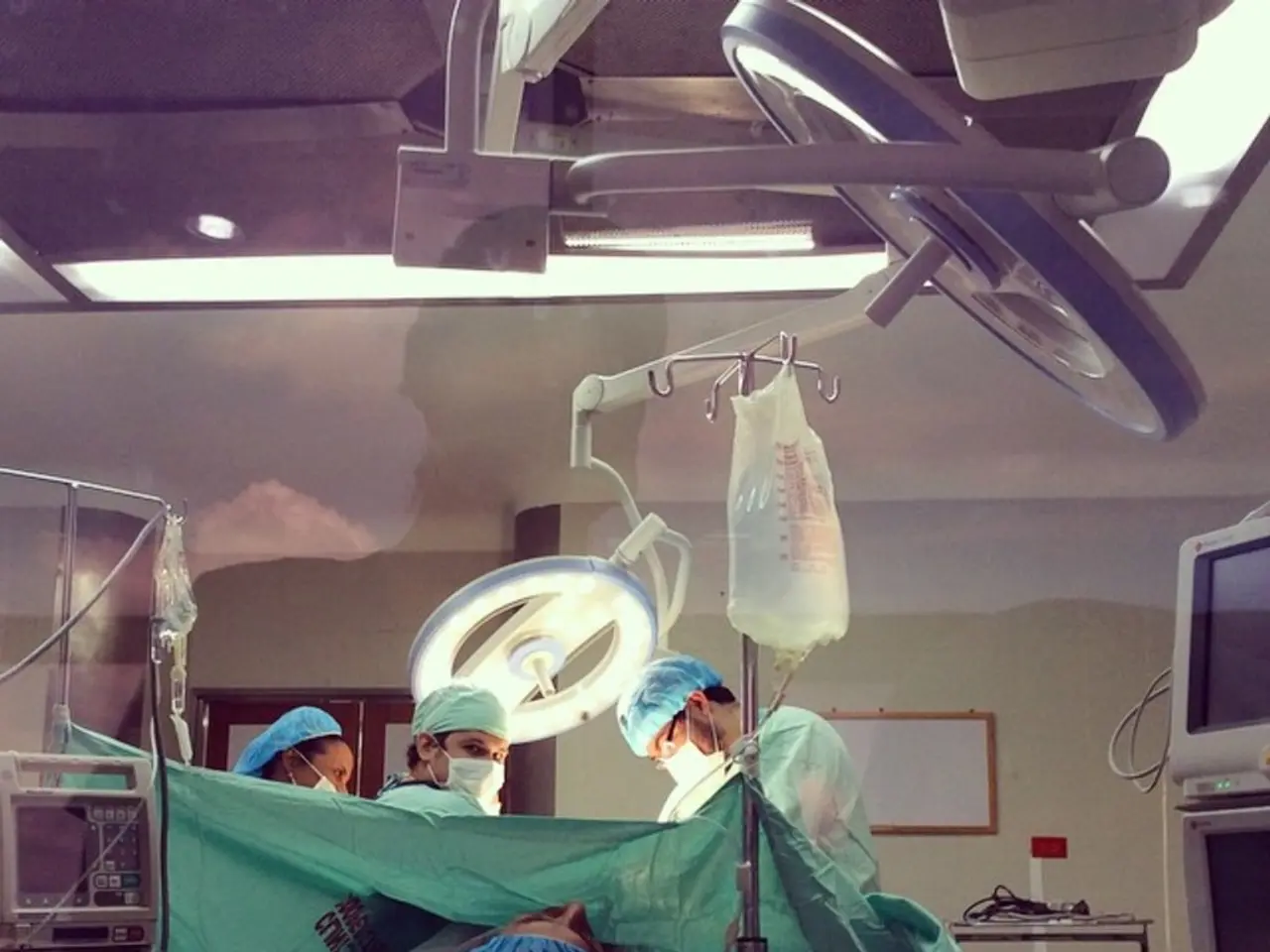
Operative hysteroscopy, a second type of hysteroscopy, uses the hysteroscope as a surgical tool. It can be used to remove adhesions, locate and remove an intrauterine device, remove fibroids or growths, perform a sterilization procedure, or take a biopsy of tissue [2].
While a hysteroscopy is not usually painful, the woman may experience cramps during the procedure [6]. Most women feel able to go about their normal activities the following day, with a few days of rest advisable if a general anesthetic was used [7].
Before the procedure, a woman may be given medication, including a sedative, to help her relax. Depending on the situation, a general or local anesthesia may be offered. The healthcare team may also insert medication into the cervix to open or dilate it before the procedure [8].
The cost of a hysteroscopy in the United States varies widely, with estimates ranging from $1,500 to $7,000. The price varies according to the type of procedure and may or may not be covered by insurance [9]. Additional procedures tend to cost extra.
It is important to note that possible side effects include mild cramping or some bloody discharge for a few days, damage to the womb or cervix, womb infections, feeling faint or dizzy, excessive bleeding, and in rare cases, the need for surgery or the removal of the womb [10].
A woman is advised to avoid sex for a week or until any bleeding has stopped, to reduce the risk of infection [11]. Hysteroscopy is considered a safe procedure with complications being rare [12].
[1] Mayo Clinic. (2021). Hysteroscopy. https://www.mayoclinic.org/tests-procedures/hysteroscopy/about/pac-20394670 [2] American College of Obstetricians and Gynecologists. (2021). Hysteroscopy. https://www.acog.org/womens-health/faqs/hysteroscopy [3] American Society for Reproductive Medicine. (2021). Hysteroscopy. https://www.asrm.org/resources-and-publications/patient-resources/glossary-of-reproductive-medicine-and-procedures/h/hysteroscopy [4] American College of Obstetricians and Gynecologists. (2019). Asherman's Syndrome. https://www.acog.org/womens-health/faqs/ashermans-syndrome [5] American College of Obstetricians and Gynecologists. (2021). Hysteroscopy. https://www.acog.org/womens-health/faqs/hysteroscopy [6] American College of Obstetricians and Gynecologists. (2021). Hysteroscopy. https://www.acog.org/womens-health/faqs/hysteroscopy [7] American College of Obstetricians and Gynecologists. (2021). Hysteroscopy. https://www.acog.org/womens-health/faqs/hysteroscopy [8] American College of Obstetricians and Gynecologists. (2021). Hysteroscopy. https://www.acog.org/womens-health/faqs/hysteroscopy [9] Healthline. (2020). Hysteroscopy Cost. https://www.healthline.com/health/hysteroscopy-cost [10] American College of Obstetricians and Gynecologists. (2021). Hysteroscopy. https://www.acog.org/womens-health/faqs/hysteroscopy [11] American College of Obstetricians and Gynecologists. (2021). Hysteroscopy. https://www.acog.org/womens-health/faqs/hysteroscopy [12] American College of Obstetricians and Gynecologists. (2021). Hysteroscopy. https://www.acog.org/womens-health/faqs/hysteroscopy
- For women experiencing abnormal uterine bleeding, a hysteroscopy procedure can aid in diagnosing and treating bleeding disorders within the uterus, contributing to better health-and-wellness.
- Beyond diagnosing conditions, hysteroscopy can also be used for various fibroid therapies-and-treatments, such as the removal of intracavitary fibroids, which are fibroids located within the uterine cavity.
- Hysteroscopy plays a crucial role in women's health, enabling the evaluation and treatment of diverse medical concerns like adhesions, polyps, and intrauterine device (IUD) issues, which can impact reproductive health under Medicare.
- To raise awareness for women's health, increased discussions about fitness-and-exercise and their positive effects on overall health alongside hysteroscopy's potential benefits can help instill a proactive approach to health maintenance.