Uncovered: Three Novel Frog Species Unearthed in Peru
## New Pristimantis Frog Species Discovered in Huancabamba Mountains, Peru
### A Biodiversity Hotspot Unveils Three New Frog Species
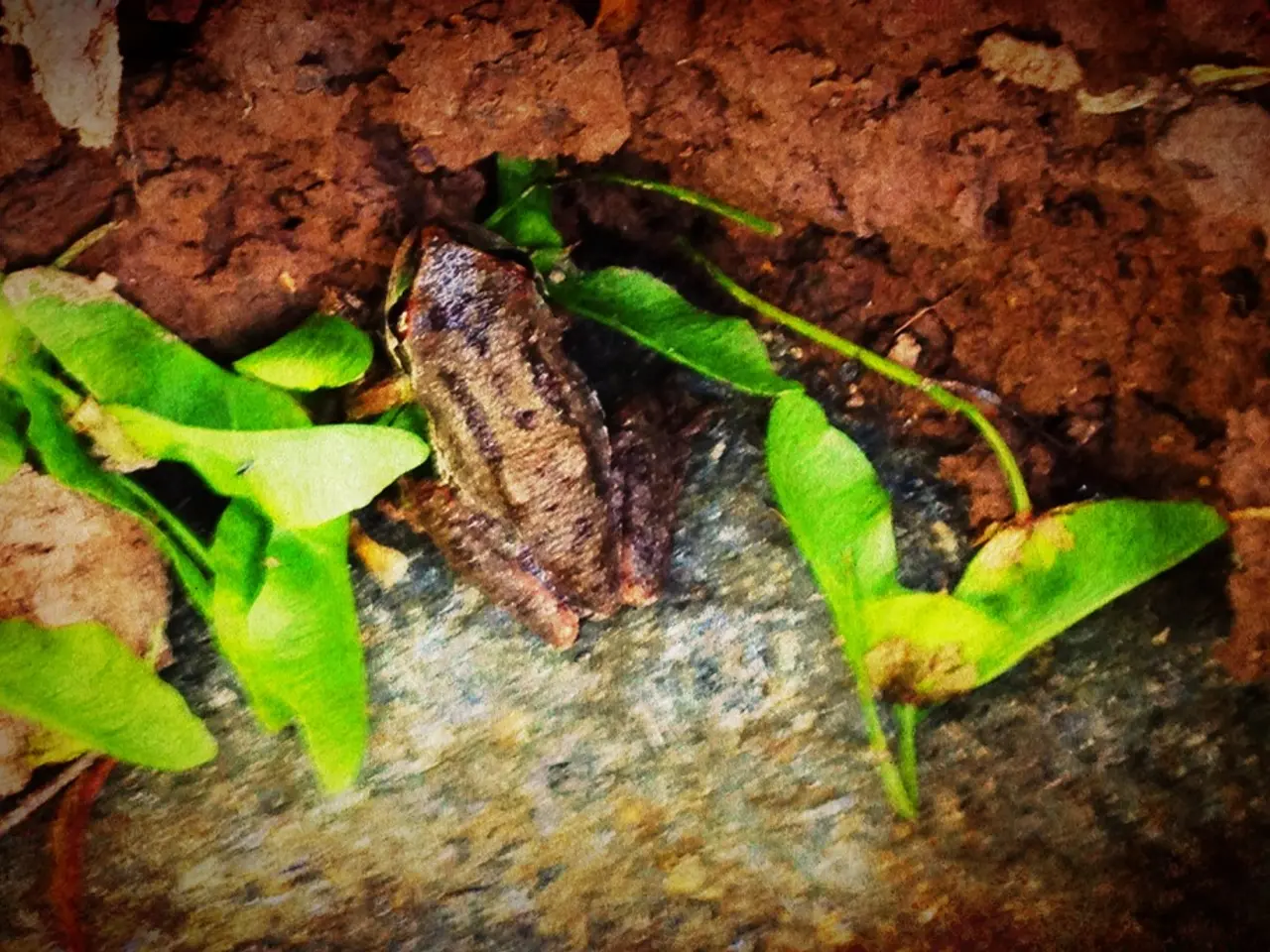
In a significant discovery for the world of herpetology, a team of Peruvian scientists, led by herpetologist Germán Chávez, has uncovered three new species of terrestrial frogs in the Huancabamba Mountain Range, located in northwestern Peru [1][2][3]. The newly identified species, *Pristimantis chinguelas*, *Pristimantis nunezcortezi*, and *Pristimantis yonke*, have been named and confirmed through morphological, genetic, and bioacoustic analyses, shedding light on the region's rich biodiversity.
### Uncharted Territories and Stunning Discoveries
The new species inhabit the paramos and adjacent elfin forests of the mountain ridges, with *Pristimantis chinguelas* found on a cliffside of Cerro Chinguelas and *Pristimantis yonke*, the smallest of the three, discovered deep inside bromeliads at nearly 3,000 meters above sea level [2][3]. The Huancababma Mountain Range, characterized by steep relief and a variable climate, presents a challenging yet rewarding environment for scientific exploration [1][3].
### Distinctive Features - **Pristimantis chinguelas**: This species is distinguished by its body covered with prominent large tubercles on both sides and its high-pitched peep, which can be heard on humid nights [2]. - **Pristimantis nunezcortezi**: While specific characteristics of this species are not detailed in the available sources, it is one of the newly identified species in the region [1][3]. - **Pristimantis yonke**: It is the smallest of the three new species, found living inside bromeliads at high elevations [3].
### The Precarious Existence of the New Species While specific threats to these species are not detailed, the Andes region is often challenged by habitat loss, climate change, and other environmental factors that can impact amphibian populations [3]. The unique biodiversity of the Huancabamba Mountains, including these new species, underscores the importance of conservation efforts in this region [1][3].
### The Importance of the Discovery The discovery of these species not only expands our knowledge of the *Pristimantis* genus, which is the most diverse group of amphibians, but also highlights the region's critical role in supporting endemic species [2][3]. The Huancabamba Mountains serve as a vital connection between the Amazon and the Pacific coast, making it a critical frontier for amphibian research, showcasing the potential for further discoveries in this understudied region [3].
- The Huancabamba mountain range is a region of great biogeographical importance due to its biodiversity. - The new species were found in the dwarf forests and persistent fog meadows of the Huancabamba mountains. - The new frog species are distinguished by their large yellow eyes and cream, yellow, and brown coloration. - The discovery was made by a team of Peruvian scientists. - The discovery was made a few weeks prior to the announcement. - The announcement was made to the French Press Agency. - The new species belong to the genus Pristimantis. - The frogs were found in a forest ecosystem located between 2,000 and 3,000 meters above sea level. - The Peruvian Herpetology Institute announced the discovery on July 4.
- The discovery of these new frog species, belonging to the genus Pristimantis, in the Huancabamba Mountain Range underscores the significant biodiversity of this region, making it a crucial area of environmental-science.
- The Huancabamba Mountain Range, with its dwarf forests and persistent fog meadows, serves as a primary habitat for health-and-wellness-related research, particularly in the field of fitness-and-exercise, as these high-altitude environments can provide insights into natural adaptations.
- As the world grapples with climate-change, the precarious existence of these new species in the Huancabamba Mountain Range, characterized by steep relief and a variable climate, provides a critical lens for understanding the impact of climate change on science, including environmental-science and health-and-wellness.