
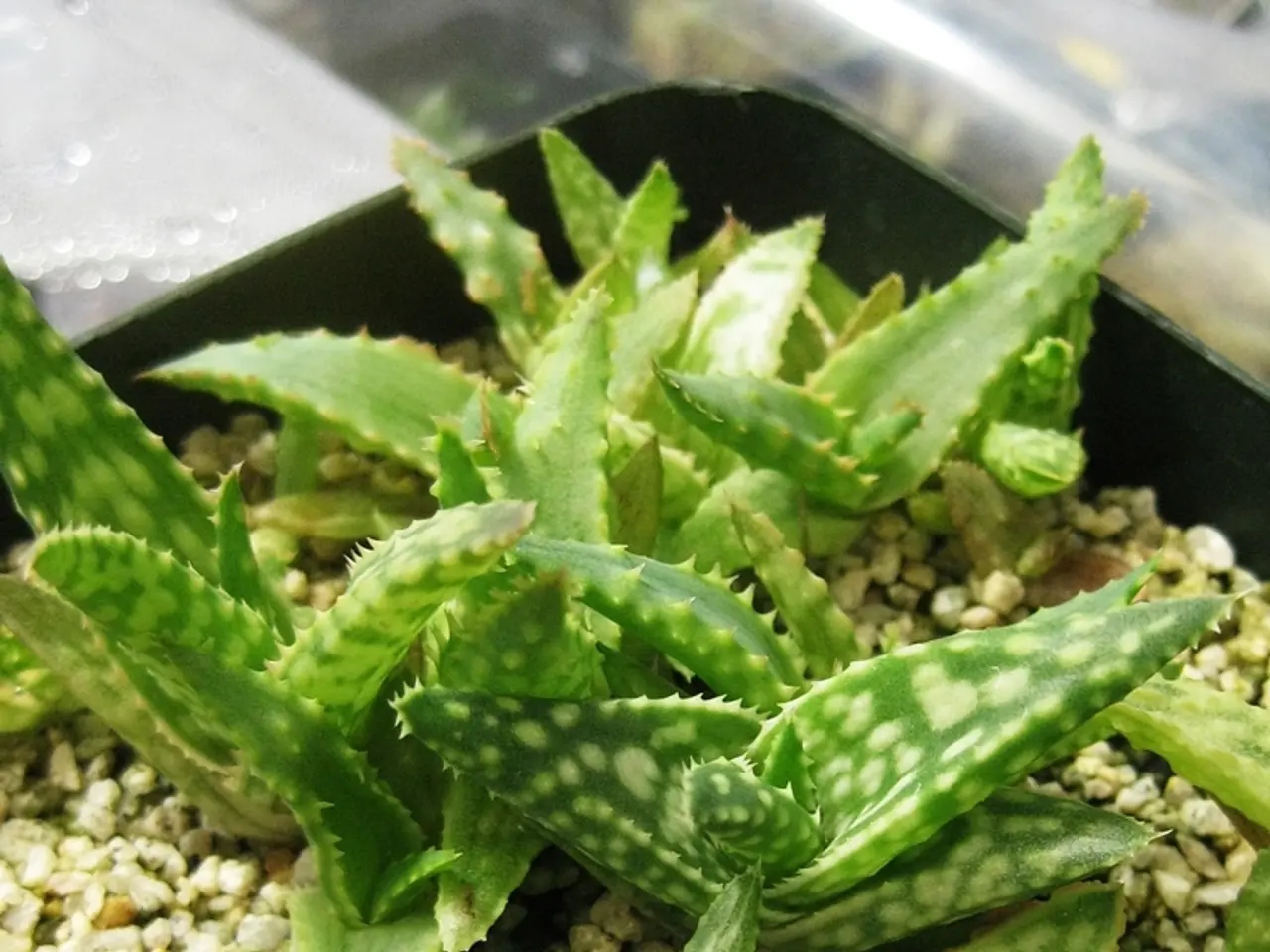
Utilizing Aloe Vera for Sunburn: Application Guide
Aloe vera, a popular household plant, is often turned to for its soothing properties when it comes to sunburn relief. While it may not protect against sunburn, it can certainly help ease the discomfort and aid in the healing process.
Aloe vera contains a variety of active compounds, including polysaccharides, antioxidants, antimicrobial agents, and aloin, which are known to reduce inflammation, promote skin healing, rehydrate damaged skin, and prevent infection in sunburned areas [1][3]. These properties make it an effective topical treatment for first- and second-degree burns [2].
To make the most of aloe vera's benefits, it's recommended to use pure aloe vera gel directly on the sunburned skin. This can be from a commercial product that contains high concentrations of pure aloe or from fresh aloe vera leaf gel extracted by splitting the leaf and applying the inner gel [1]. For added comfort, the gel can be refrigerated before application to provide a cooling effect on inflamed skin [1].
It's important to remember that aloe vera should be applied promptly after sunburn has occurred to soothe and rehydrate the skin. It is generally recommended to avoid occlusive oils immediately after burning because they might trap heat; aloe vera can be applied earlier since it cools and calms the skin [1][5]. Regular reapplication can help maintain moisture and support healing until the burn resolves [4][5].
However, it's essential to note that aloe vera is not a preventive measure against sunburn itself. To prevent sunburn, it's recommended to wear sun-protective clothing and apply sunscreen every 2 hours during exposure to high ultraviolet rays [6].
Aloe vera is suitable for a range of skin types and can help reduce inflammation and ease sunburn symptoms. However, before using aloe vera gel on a large area of skin, it's always a good idea to perform a patch test to ensure no adverse reactions occur [7].
While aloe vera is primarily known for its sunburn-relieving properties, it also has a variety of other uses, including improving digestive health, helping clear acne, and being used as a cooking oil [8].
In conclusion, aloe vera is scientifically supported as a topical treatment to relieve symptoms and aid healing after sunburn, but it is not a preventive measure against sunburn itself. For best results, apply pure aloe vera gel cooled for added comfort, starting soon after burn and continuing through the healing phase [1][3][4][5].
References: [1] https://www.ncbi.nlm.nih.gov/pmc/articles/PMC6267574/ [2] https://www.ncbi.nlm.nih.gov/pmc/articles/PMC2626740/ [3] https://www.ncbi.nlm.nih.gov/pmc/articles/PMC6193029/ [4] https://www.ncbi.nlm.nih.gov/pmc/articles/PMC6014396/ [5] https://www.ncbi.nlm.nih.gov/pmc/articles/PMC6583548/ [6] https://www.cancer.org/cancer/skin-cancer/prevention-and-early-detection/protect-yourself-from-the-sun.html [7] https://www.ncbi.nlm.nih.gov/pmc/articles/PMC6405895/ [8] https://www.healthline.com/health/aloe-vera#uses-and-risks
- Aloe vera, rich in polysaccharides, antioxidants, and aloin, is often used in health-and-wellness skincare products for its beauty benefits, such as reducing inflammation and promoting skin healing.
- The University of California's Davis integrative medicine program recommends aloe vera as a potential remedy for easing symptoms of asthma, thanks to its antimicrobial and anti-inflammatory properties.
- As the use of aloe vera extends beyond sunburn relief, it has been found to have science-backed effects on digestive health, making it a useful ingredient in certain health-and-wellness products.
- In addition to being an effective moisturizer for sunburned skin, aloe vera can be used in skin-care routines to rehydrate and nourish dry or damaged skin, contributing to overall skin health and beauty.