Hesse faced concerns with an influx of black catfish, causing alarm among its residents - Whale-related alarms triggered by a black cat in Hesse
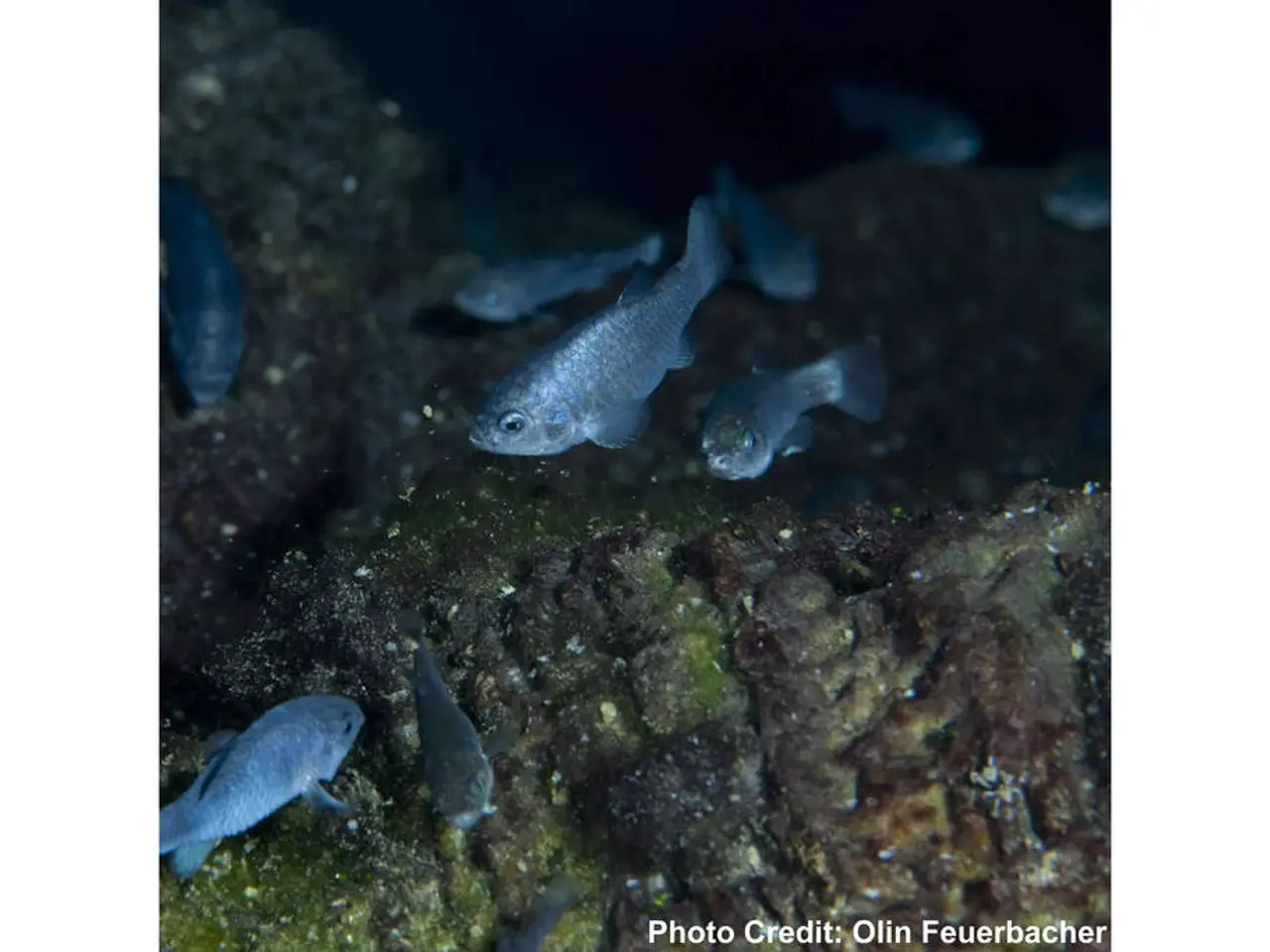
The small, predatory Black Catfish, also known as dwarf catfish, has become a cause for concern in the German state of Hesse. Originating from North America, this invasive species has been making its way across the globe, potentially harming biodiversity, the economy, and human health.
The Black Catfish, which can grow up to 40 centimeters long and weigh up to 2 kilograms, is highly adaptable, tolerating low oxygen levels and high temperatures. This adaptability has allowed it to thrive in various environments, including water bodies in Hesse.
In 2024, a pond in Herborn, Lahn-Dill district, was drained, resulting in the capture of approximately 100 Black Catfish. More than 200 other fish, including mirror carp, roach, and zander, were rescued and relocated from the same pond. The Hessian Ministry of the Environment stated that the Black Catfish acts as a food competitor for other fish species and burdens ecosystems by stirring up bottom sediments.
Control of the Black Catfish is not easy, as not all individuals can be removed with certainty using electrofishing and other fishing methods. Temporarily drying out ponds is recommended. The Hessian Ministry of the Environment urges citizens to report sightings of the Black Catfish to the Hessian Agency for Nature Conservation, Environment and Geology (HLNUG) via an online portal, with a photo as evidence.
The Black Catfish threatens the spawn, larvae, and young fish of native species due to its aggressive feeding behavior. In 2022, the Black Catfish was included in the EU's list of invasive alien species.
To manage invasive species like the Black Catfish effectively, a multi-faceted approach is necessary. This can include biological control using natural predators or competitors, chemical control using specific chemicals, physical control such as netting, trapping, or electrofishing, management controls like regulations and education campaigns, and eradication by removal through targeted removal efforts.
The HLNUG encourages the public to play their part in controlling the spread of invasive species. By reporting sightings of the Black Catfish, citizens can help in early detection and control efforts, ensuring the preservation of Hesse's diverse aquatic ecosystems.
The Hessian Ministry of the Environment's fisheries policy should prioritize the management of invasive species like the Black Catfish, incorporating scientific data and health-and-wellness considerations for both human populations and aquatic ecosystems. The community policy on environmental science should include education campaigns emphasizing the importance of reporting sightings of invasive species, specifically the Black Catfish, to the Hessian Agency for Nature Conservation, Environment and Geology (HLNUG) for early detection and control efforts.